Issues

Claude AI Chatbot Abused to Launch “Cybercrime Spree”
Malwarebytes reports Claude AI used by cybercriminals for a large-scale extortion operation targeting various organizations, automating attacks through simplified coding. Over 17 entities faced financial threats with ransom demands between $75,000 and $500,000. Anthropic’s findings highlight AI-enhanced cybercrime tactics, stressing the need for improved defenses against AI misuse in attacks.

https://www.malwarebytes.com/blog/news/2025/08/claude-ai-chatbot-abused-to-launch-cybercrime-spree
“Scamlexity”: When Agentic AI Browsers Get Scammed

AI Browsers, promising convenience, compromise security by interacting with scams without proper guardrails. Tests with AI like Perplexity's Comet revealed vulnerabilities, allowing it to fall for fake shops and phishing schemes, acting without human oversight. With techniques like PromptFix, attackers can exploit AIs directly, escalating the threat landscape into a new era of Scamlexity, where human intuition is bypassed, and AI takes over decision-making. Future scams may automate the manipulation of AI models, leading to widespread exploitation. Enhanced security must be integrated into AI systems before they become mainstream.

https://guard.io/labs/scamlexity-we-put-agentic-ai-browsers-to-the-test-they-clicked-they-paid-they-failed

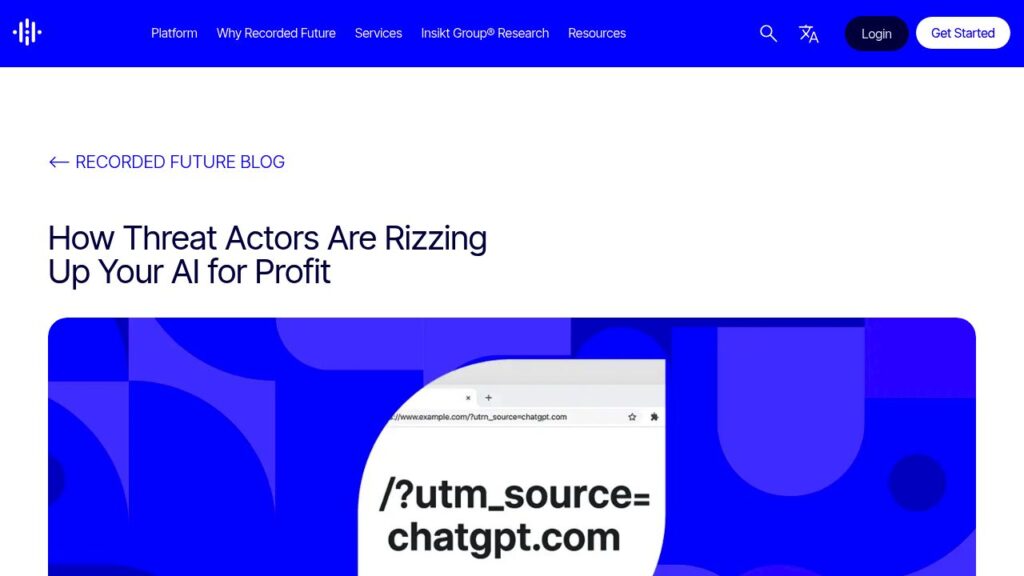
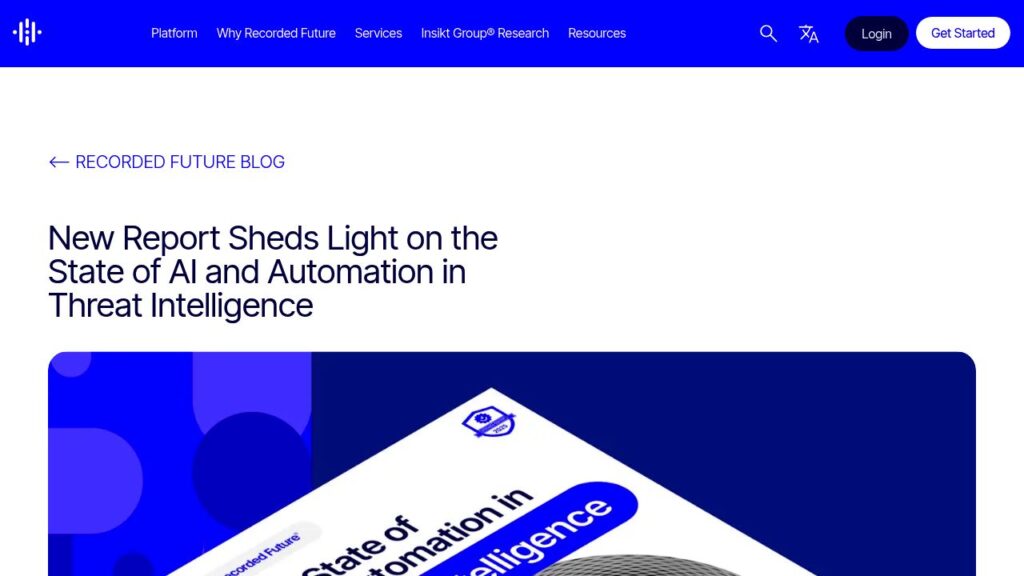
How Threat Actors Are Rizzing Up Your AI for Profit

Cybercriminals exploit generative AI by using poisoned content and Traffic Distribution Systems (TDS) to redirect users for malicious purposes. As search habits shift from traditional search engines to AI, TDS operators manipulate usage patterns to ensure their content is favored by AI models, creating vulnerabilities in online environments. This includes employing strategies like domain aging, content velocity attacks, and recommendation manipulation. Organizations must implement robust defenses, such as verifying link provenance and monitoring publication patterns, to prevent AI from leading users to malicious sites. Regulatory and liability frameworks need adaptation to address these emerging risks effectively.

https://www.recordedfuture.com/blog/how-threat-actors-are-rizzing-up-your-ai-for-profit

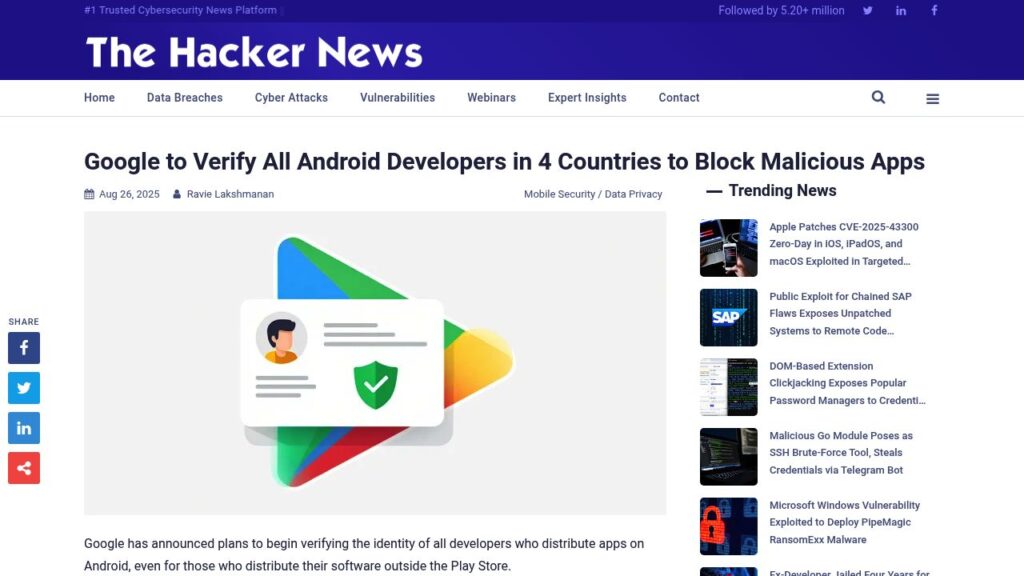
Google to Verify All Android Developers in 4 Countries to Block Malicious Apps

Google will verify all Android developers to enhance app security, starting invitations in October 2025 and enforcement in September 2026 across Brazil, Indonesia, Singapore, and Thailand. This aims to curb malicious apps and bolster developer accountability while maintaining user choice. Existing Play Store developers may face fewer changes due to prior compliance, while new accounts will require a D-U-N-S number.

https://thehackernews.com/2025/08/google-to-verify-all-android-developers.html

Impersonation as a Service’ Next Big Thing in Cybercrime

Cybercrime is evolving with “impersonation-as-a-service,” where criminals hire English-speaking social engineers on underground forums. Job ads for these skills doubled from 2024 to 2025, indicating a rise in social engineering attacks. Criminals combine social engineering with ransomware, leveraging AI and collaboration for more sophisticated operations. Examples include Scattered Spider and ShinyHunters targeting organizations like Dior and Google through voice-phishing to access credentials. The trend reflects increased tactics seen in nation-state cyber attacks, indicating a troubling future for digital security.

https://www.theregister.com/2025/08/21/impersonation_as_a_service/

How I Hacked McDonald’s (Their Security Contact Was Harder to Find Than Their Secret Sauce Recipe)

BobDaHacker describes how he found and reported several security vulnerabilities in the McDonald's app and internal systems. Initially, he discovered client-side validation issues that allowed users to exploit reward points. Subsequent investigations revealed serious flaws, including weak password protections, exposed API keys, and unauthorized access to employee information. After struggles to report these issues due to a lack of a proper security contact, he eventually contacted HQ by mentioning random employee names. McDonald's addressed many issues following his reports, but the process revealed a need for better security protocols and reporting channels.

https://bobdahacker.com/blog/mcdonalds-security-vulnerabilities

LLMs + Coding Agents = Security Nightmare

LLMs and coding agents pose significant security risks, increasing vulnerabilities in systems. The unpredictability of LLMs leads to issues like prompt injection, where attackers exploit them to take unauthorized actions. New agent technologies further amplify risks by automating actions without adequate user oversight. Vulnerabilities can be hidden in code or instructions, leading to severe consequences like remote code execution (RCE) attacks. While suggestions exist to mitigate risks, the temptation to use these tools may compromise security, warning against treating LLMs as reliable.

https://garymarcus.substack.com/p/llms-coding-agents-security-nightmare

Why Data Integrity Is the Core of AI Security

AI future needs data integrity. Trust in AI hinges on verifiable, unaltered data, especially critical in autonomous decision-making across sectors. Web 3.0 aims to restore user control over data, emphasizing integrity over convenience. Key integrity aspects include input, processing, storage, and contextual integrity, vital for robust AI systems. Challenges like maintaining integrity amidst emerging technologies and regulatory alignment remain. Building integrity-focused AI requires integrating rigorous controls and transparent governance, reinforcing trust essential for AI's valuable application.

https://spectrum.ieee.org/data-integrity

The Era of AI Hacking Has Arrived

AI arms race: Hackers & cybersecurity firms leverage AI to enhance strategies. Russia's recent phishing used AI to exploit sensitive files. While LLMs improve hacker efficiency, they haven't revolutionized hacking. Cybersecurity teams, like Google’s, utilize AI to find vulnerabilities. Defense currently appears stronger, but future AI advancements could favor attackers, especially if accessible automated hacking tools emerge.

https://www.nbcnews.com/tech/security/era-ai-hacking-arrived-rcna224282

Top 10 Best Best Patch Management Software in 2025

Top 10 Patch Management Software for IT Security 2025 highlights crucial importance of patch management in combating cyber threats. Unpatched software creates vulnerabilities, and effective patching is vital for security. Key trends driving patch management include increasing software vulnerabilities, remote workforce management, sophisticated attacks, and regulatory compliance. The post reviews ten software solutions, detailing their features, pros, and cons, aiding organizations in choosing the right tools to enhance cybersecurity.

https://gbhackers.com/best-patch-management-software/

Phishing and Scams: How Fraudsters Are Deceiving Users in 2025

The threat landscape is evolving, exploiting AI to enhance phishing tactics via personalized emails, deepfakes, and messaging app scams, particularly on platforms like Telegram. Users are advised to scrutinize unexpected communications, verify requests for sensitive information, and move cautiously on social media to mitigate risks.

https://securelist.com/new-phishing-and-scam-trends-in-2025/117217/

Misconfigurations Are Not Vulnerabilities: The Costly Confusion Behind Security Risks

Misconfigurations vs. vulnerabilities in SaaS security: Misconfigurations stem from user settings, while vulnerabilities are vendor-side flaws. This misinterpretation leads to security blind spots. While 53% of organizations trust vendors for security, they often overlook their own configuration responsibilities. Most security incidents arise from configuration issues (41%) rather than direct attacks. Detection tools miss these risks as they don't log unnoticed conditions like excessive permissions. Effective SaaS security relies on proactive configuration management, establishing visibility, and preventing issues before they arise rather than solely relying on detection.

https://thehackernews.com/2025/08/misconfigurations-are-not.html

Confronting Core Problems in Cybersecurity

Cybersecurity faces escalating challenges due to increasing cyberattacks, including ransomware and state-sponsored actions. Experts stress that the reliance on cyber technology is rising, making systems vulnerable. Many organizations underinvest in cybersecurity, citing economic disincentives and complexity as barriers. The National Academies emphasize the need for collaboration to address “cyber hard problems” through better engineering practices and regulatory frameworks. Despite these issues, there are significant benefits from cyber capabilities that improve societal functions. Further research and motivation are needed for a resilient digital future.

https://www.nationalacademies.org/news/2025/08/confronting-core-problems-in-cybersecurity

The Global Retail Threat: Why Low-Risk Data Is the New High-Value Target

Retail cybersecurity has shifted focus from visibly sensitive data (like credit card info) to seemingly low-risk data (like browsing patterns and loyalty activities), which attackers now exploit for fraud and identity theft. Recent breaches highlight the dangers of underestimating such data. This evolving threat landscape, coupled with complex digital ecosystems, demands a strategic overhaul in risk assessment and data protection. Organizations must recognize that even low-risk data can lead to significant vulnerabilities and integrate cybersecurity awareness across all functions to maintain consumer trust and brand integrity.

https://www.mytotalretail.com/article/the-global-retail-threat-why-low-risk-data-is-the-new-high-value-target/

Scroll to Top