
psychology

Dutch Study Finds Teen Cybercrime Is Mostly Just a Phase
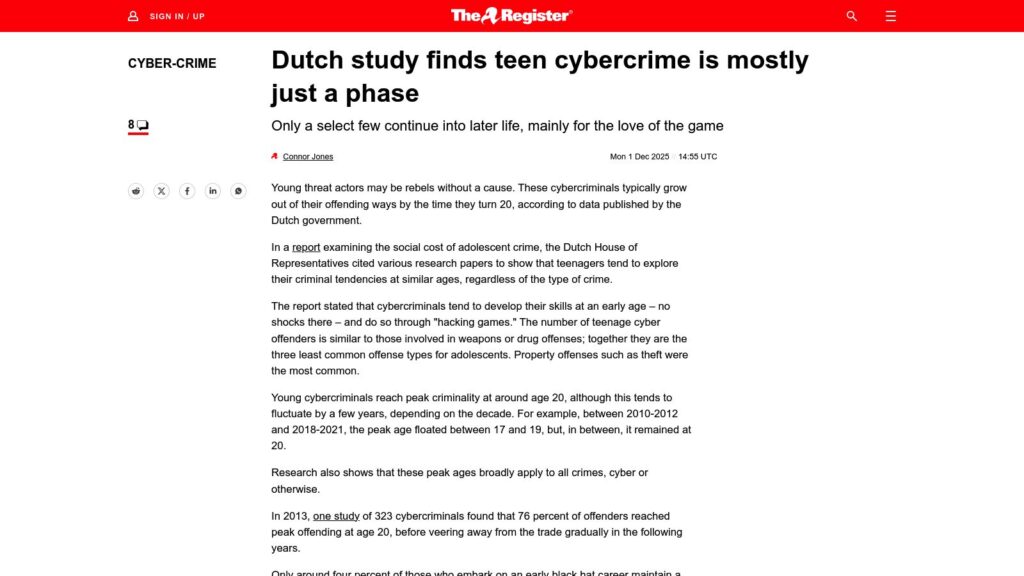
Dutch study reveals teen cybercrime is largely temporary; offenders mature by 20, with few continuing. Most youngsters dabble in cybercrime, similar to other offenses. Peak offending age is 20, but few persist beyond that due to curiosity about tech, not monetary gain. Annual social cost of adolescent crime in the Netherlands is €10.3 billion, with costs of cybercrime challenging to quantify. Longitudinal research on cybercrime remains limited, impacting accurate cost assessments.

https://www.theregister.com/2025/12/01/dutch_study_teen_cybercrime/
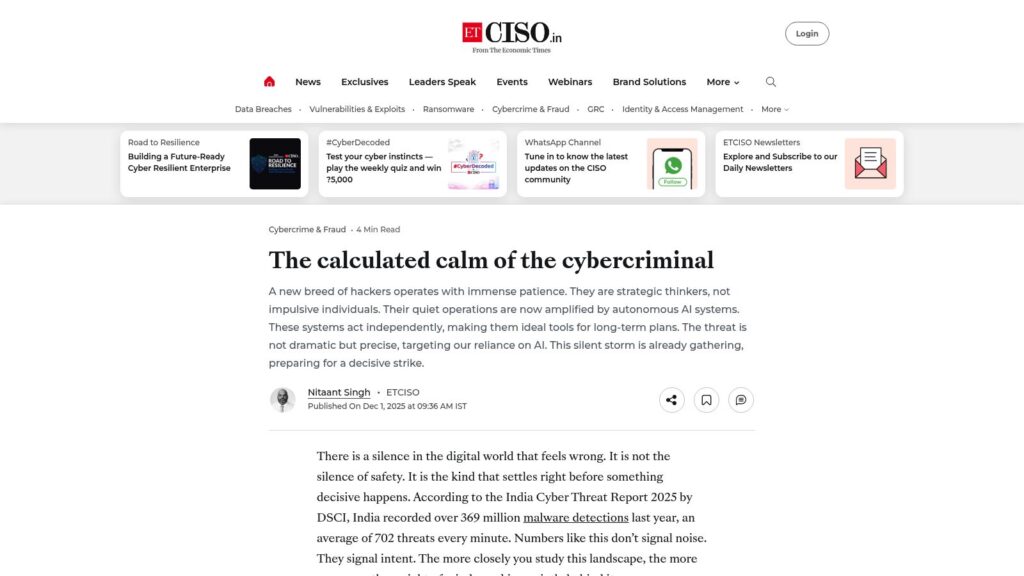
The Calculated Calm of the Cybercriminal

Cybercriminals are becoming strategic and patient, using autonomous AI to execute long-term plans. The increased reliance on AI in organizations creates opportunities for AI to infiltrate systems without detection. Unlike impulsive hackers, these individuals are methodical, seeking to evade capture while achieving financial freedom. The quiet calm in digital safety is deceptive, hinting at a looming threat driven by calculated, intelligent adversaries rather than chaotic behavior.

https://ciso.economictimes.indiatimes.com/news/cybercrime-fraud/the-silent-threat-understanding-the-mind-of-the-modern-cybercriminal/125684816

Scroll to Top