frauds

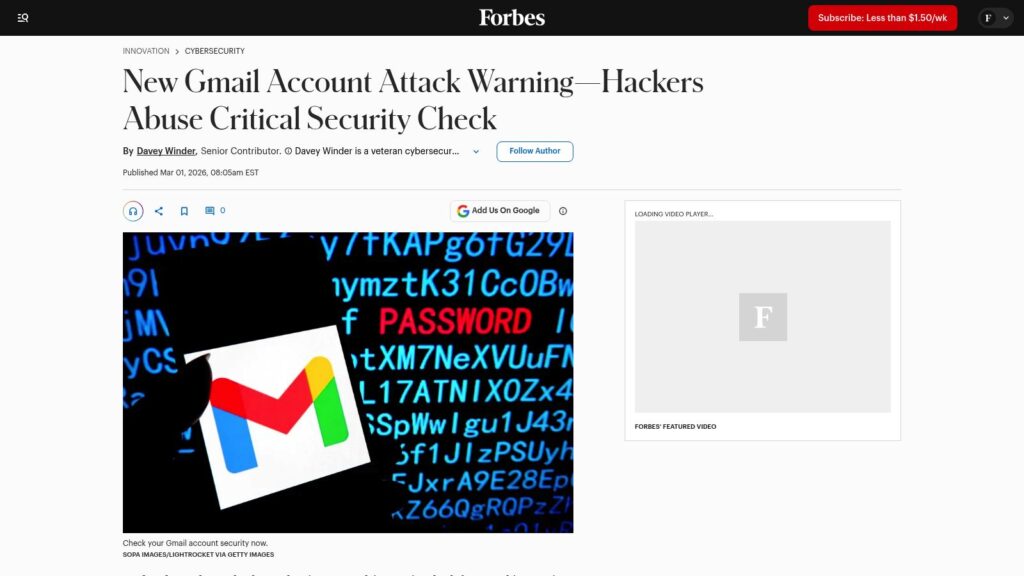
New Gmail Account Attack Warning—Hackers Abuse Critical Security Check

Hackers are targeting Gmail users with a malicious fake Google Account Security Checkup tool that grants attackers access to sensitive information, including push notifications, contacts, GPS location, and clipboard contents. This attack uses deception to trick users into following prompts that compromise their account security. To protect themselves, users should only use the official Google Account Security Checkup tool through official channels, such as typing the URL directly into their browser.

https://www.forbes.com/sites/daveywinder/2026/03/01/check-your-gmail-account-security-now-ongoing-attacks-reported/

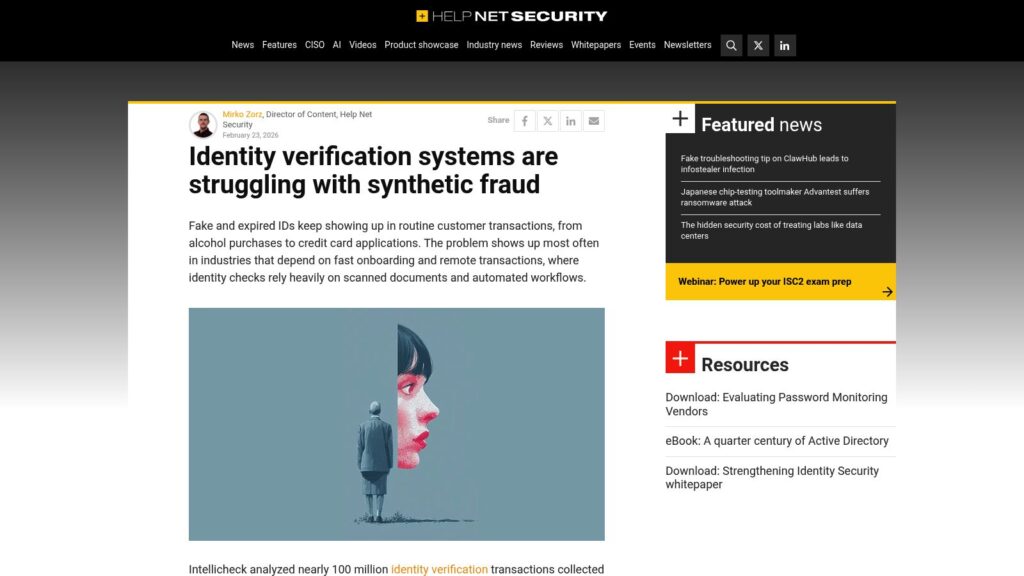
Identity Verification Systems Are Struggling With Synthetic Fraud

Identity verification systems face issues with synthetic fraud as fake and expired IDs appear in transactions, especially in fast onboarding and remote transactions. Intellicheck's analysis of nearly 100 million transactions shows a 97.85% average verification success rate, concealing significant industry differences. Key fraud sources include expired credentials and synthetic identities, exacerbated by AI capabilities. Industries like alcohol retail and online-only banks exhibit the highest failure rates. Organizations are encouraged to focus on identity verification metrics to preempt fraud. The need for advanced, multi-layered verification technologies is emphasized as traditional methods fail to counteract evolving fraud tactics.

https://www.helpnetsecurity.com/2026/02/23/analysis-identity-verification-fraud-report/

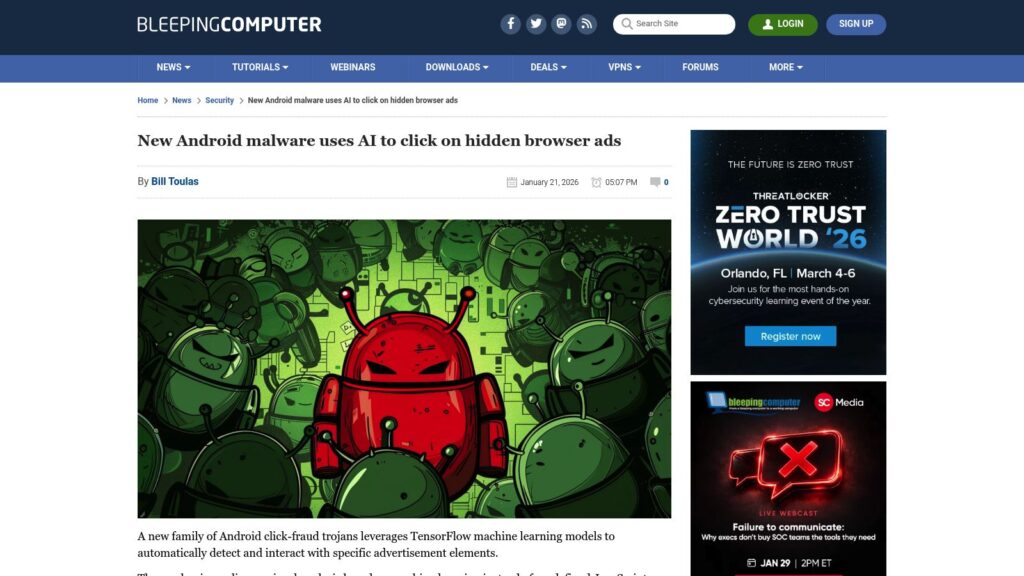
New Android Malware Uses AI to Click on Hidden Browser Ads

New Android malware utilizes AI with TensorFlow to automatically click on hidden ads, enhancing click fraud mechanisms. Distributed via Xiaomi’s app store and third-party sites, it uses a ‘phantom’ mode for covert actions and a ‘signalling’ mode for real-time control. Affected apps initially lack malicious intent but receive updates adding harmful features, misleading users. Users are advised to avoid non-Google Play apps to mitigate risks.

https://www.bleepingcomputer.com/news/security/new-android-malware-uses-ai-to-click-on-hidden-browser-ads/

Microsoft Knocks Offline RedVDS Cybercrime Marketplace Linked to $40M in Fraud

Microsoft disrupted the RedVDS cybercrime marketplace, linked to $40 million in fraud, by seizing key infrastructure and working with international law enforcement. RedVDS enabled mass phishing and account takeover campaigns, compromising over 191,000 organizations worldwide. The service sold access to Windows RDP servers, leaving behind technical indicators like a shared computer name and a cloned Windows Server 2022 image.

https://redmondmag.com/articles/2026/01/15/microsoft-knocks-offline-redvds-cybercrime-marketplace.aspx

Banks Collaborate to Warn Consumers of Recovery Scams

TLDR: Five banks warn about growing recovery scams targeting fraud victims, where scammers promise to recover lost funds for a fee. Criminals impersonate officials, pressuring vulnerable victims for personal information and money. Legitimate organizations won't charge fees for recovery. Consumers should verify contacts, avoid unsolicited offers, and report suspected scams to their banks.

https://www.vcnewsreview.com/stories/banks-collaborate-to-warn-consumers-of-recovery-scams,314246

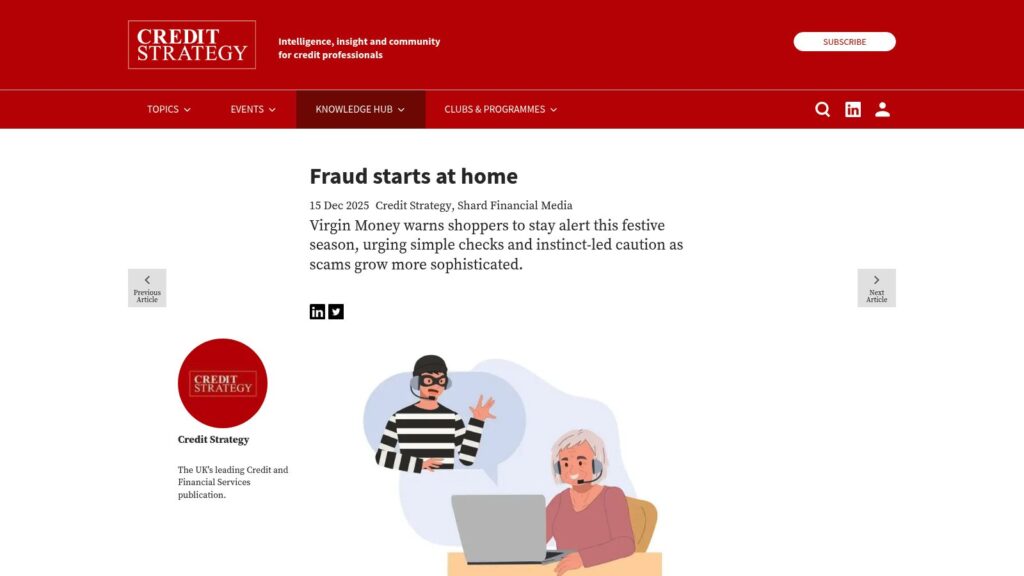
Fraud Starts at Home

Virgin Money warns consumers to be vigilant against scams this festive season, stressing personal responsibility and simple security measures. Their head of fraud highlights that individuals are the first line of defense, advising to trust instincts, secure devices, and avoid sharing sensitive information. Research shows various fraud types target different generations, with a notable increase in online scams. Customers are urged to verify sources and check for website security before sharing payment details. The bank emphasizes common sense as key to staying safe online.

https://www.creditstrategy.co.uk/knowledge-hub/fraud-starts-at-home

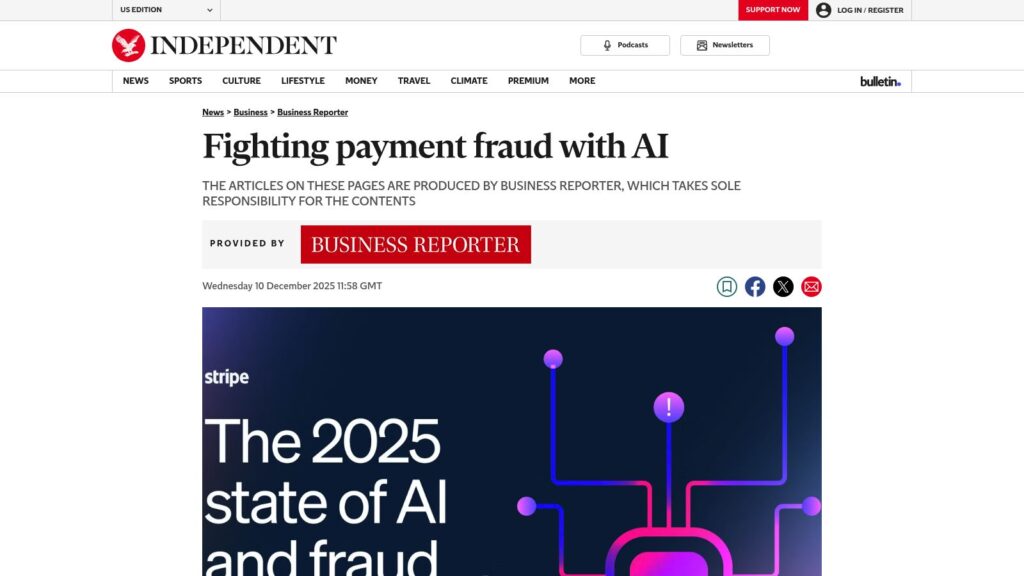
Fighting Payment Fraud With AI

AI combats rising payment fraud effectively, adapting rapidly to evolving threats. Traditional fraud defenses struggle against sophisticated attacks, leading to increased false declines that harm customer loyalty. Businesses are turning to AI for more accurate, real-time fraud detection, which boosts legitimate transactions and reduces losses. AI-enabled systems analyze vast data for nuanced risk scoring, transforming fraud prevention into a strategic growth tool. Investing in AI is essential for safeguarding revenue and enhancing customer experience.

https://www.independent.co.uk/news/business/business-reporter/payment-fraud-ai-cyber-attacks-security-b2881360.html

Are Credit Cards Safe?

Credit cards provide protections such as limited liability for unauthorized charges, fraud monitoring, and dispute resolution for questionable transactions. Security features include alerts, encryption, virtual cards, two-factor authentication, and EMV chips. Some cards offer purchase protection and chargebacks for items that are damaged or not received. Overall, credit cards usually offer more safety features than debit cards, helping cardholders prevent fraud and protect their information.

https://www.chase.com/personal/credit-cards/education/basics/credit-card-safety-features

Public Fraud Awareness Fades Between Crises Despite AI Threat Escalation, CONCRYT Finds

TLDR: CONCRYT's 2024-2025 report reveals public awareness of payment fraud spikes during major regulatory events but quickly declines despite increasing AI-enabled fraud threats, showing a disconnect between evolving risks and public vigilance. Regulatory actions drive awareness more than actual fraud incidents, highlighting geographic disparities in understanding of fraud risks. More consumer education is needed amidst rising sophisticated fraud tactics, especially involving AI.

https://ffnews.com/newsarticle/fintech/public-fraud-awareness-fades-between-crises-despite-ai-threat-escalation-concryt-finds/

Scroll to Top