
risk management

Is It Fair to Blame ‘Rogue’ AI for Security Failures?

Experts argue that labeling AI incidents as “rogue” anthropomorphizes large language models (LLMs) and shifts responsibility away from vendors, obscuring underlying security failures. Instead, defenders should treat AI systems as unpredictable software requiring strict security architectures with zero-trust principles, limiting access and enforcing controls outside the model to prevent unauthorized actions. While AI agents can autonomously discover and exploit vulnerabilities at unprecedented speed and scale, these issues reflect failures in security controls rather than intentional malicious behavior by the AI itself.

https://www.darkreading.com/insider-threats/blame-rogue-ai-security-failures
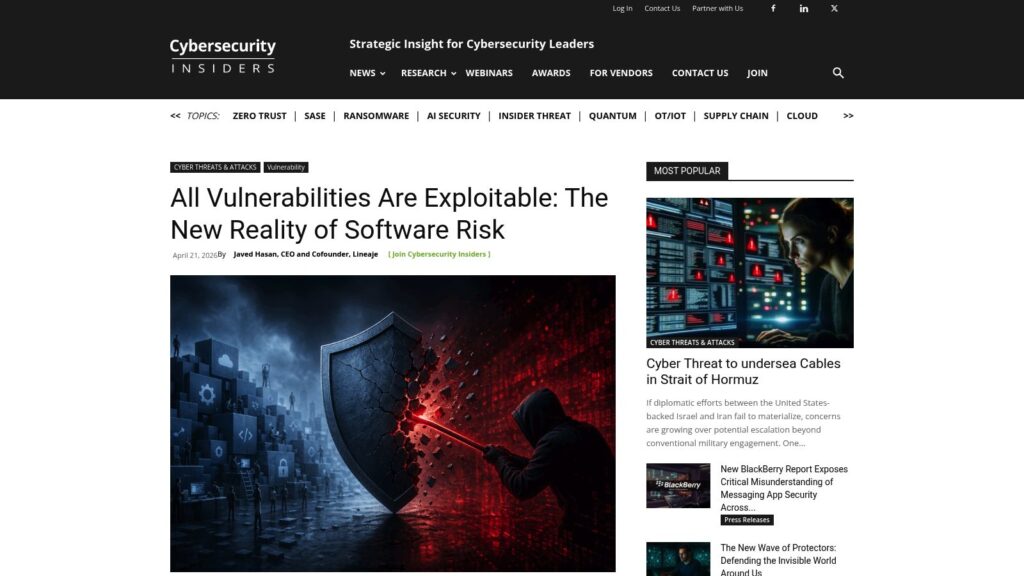
All Vulnerabilities Are Exploitable: The New Reality of Software Risk

Javed Hasan, CEO and Cofounder of Lineaje, explains that rapid software evolution and AI-generated code have made all software vulnerabilities potentially exploitable, as automated tools can quickly create working exploits. He argues that traditional vulnerability management is outdated, urging organizations to adopt continuous security practices that assume every vulnerability can be weaponized, embedding security directly into development with automated governance to reduce risk in dynamic software environments.

https://www.cybersecurity-insiders.com/all-vulnerabilities-are-exploitable-the-new-reality-of-software-risk/

Lessons From AI Hacking: Every Model, Every Layer Is Risky

Hillai Ben Sasson and Dan Segev, researchers at Wiz, discovered vulnerabilities in every major AI platform they targeted over two years of research. Their findings, to be presented at the RSAC Conference, highlight the importance of focusing on AI infrastructure security across model training, inference, application, and cloud layers. The researchers emphasize the need for regular security reviews and compliance checks to address the rapidly evolving threat landscape.

https://www.darkreading.com/application-security/lessons-ai-hacking-model-every-layer-risky

Video Gaming and Cybersecurity: Navigating Legal and Technological Challenges

Video gaming industry faces significant cyber risks due to rapid growth, attracting cyber criminals. Regulators worldwide are extending critical infrastructure legislation to gaming. This includes the NIS2 Directive and Cyber Resilience Act which impose stringent cybersecurity requirements on game companies. Key risks involve in-game integrity, data breaches, and compliance with regulations like GDPR. Effective cybersecurity measures are essential for legal compliance and to maintain user trust in an evolving digital landscape.

https://www.nortonrosefulbright.com/en/knowledge/publications/77cbcb67/video-gaming-and-cybersecurity

Scroll to Top