Misconfigurations Are Not Vulnerabilities: The Costly Confusion Behind Security Risks
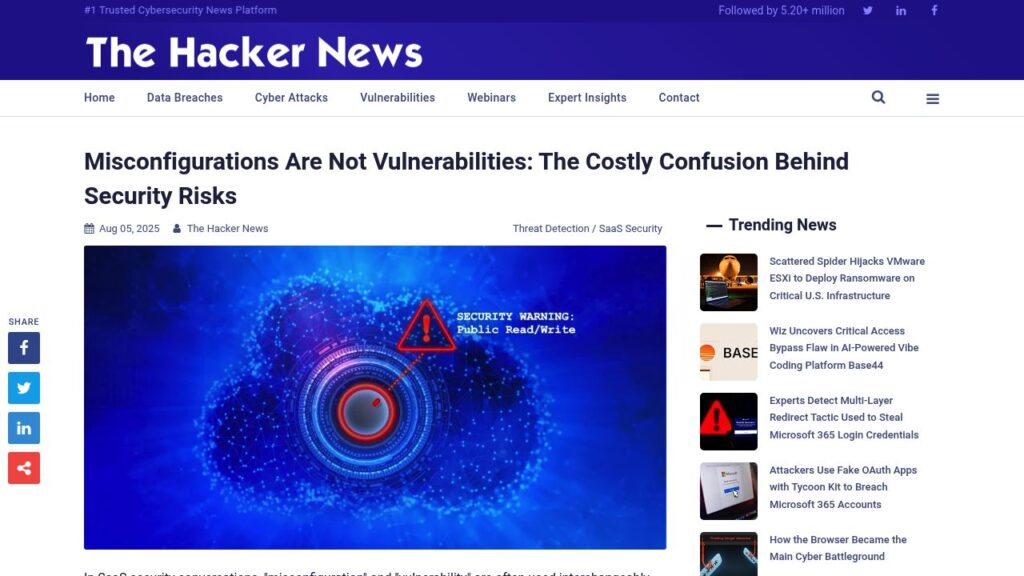
Misconfigurations vs. vulnerabilities in SaaS security: Misconfigurations stem from user settings, while vulnerabilities are vendor-side flaws. This misinterpretation leads to security blind spots. While 53% of organizations trust vendors for security, they often overlook their own configuration responsibilities. Most security incidents arise from configuration issues (41%) rather than direct attacks. Detection tools miss these risks as they don't log unnoticed conditions like excessive permissions. Effective SaaS security relies on proactive configuration management, establishing visibility, and preventing issues before they arise rather than solely relying on detection.
https://thehackernews.com/2025/08/misconfigurations-are-not.html