Dutch Study Finds Teen Cybercrime Is Mostly Just a Phase
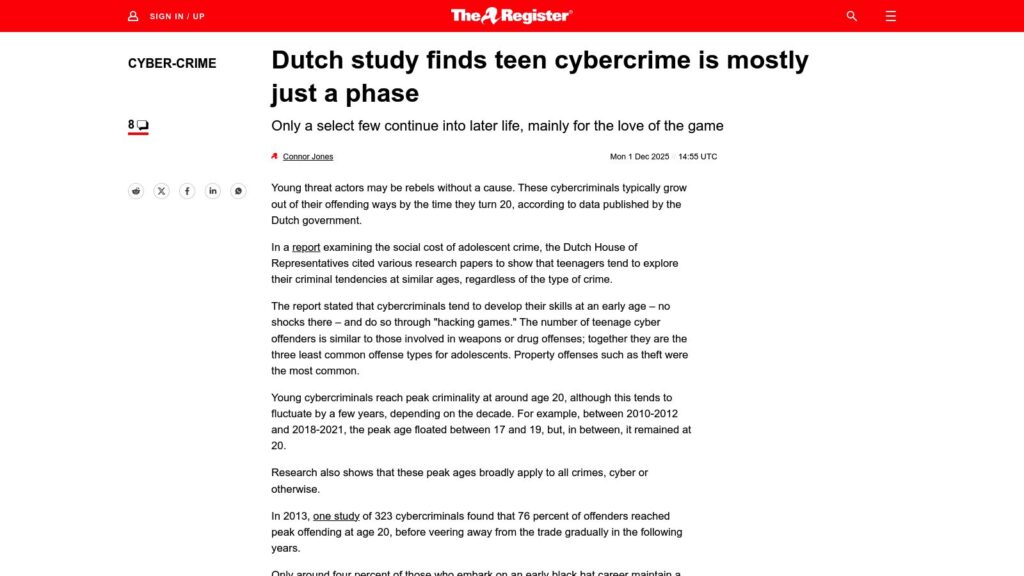
Dutch study reveals teen cybercrime is largely temporary; offenders mature by 20, with few continuing. Most youngsters dabble in cybercrime, similar to other offenses. Peak offending age is 20, but few persist beyond that due to curiosity about tech, not monetary gain. Annual social cost of adolescent crime in the Netherlands is €10.3 billion, with costs of cybercrime challenging to quantify. Longitudinal research on cybercrime remains limited, impacting accurate cost assessments.

https://www.theregister.com/2025/12/01/dutch_study_teen_cybercrime/
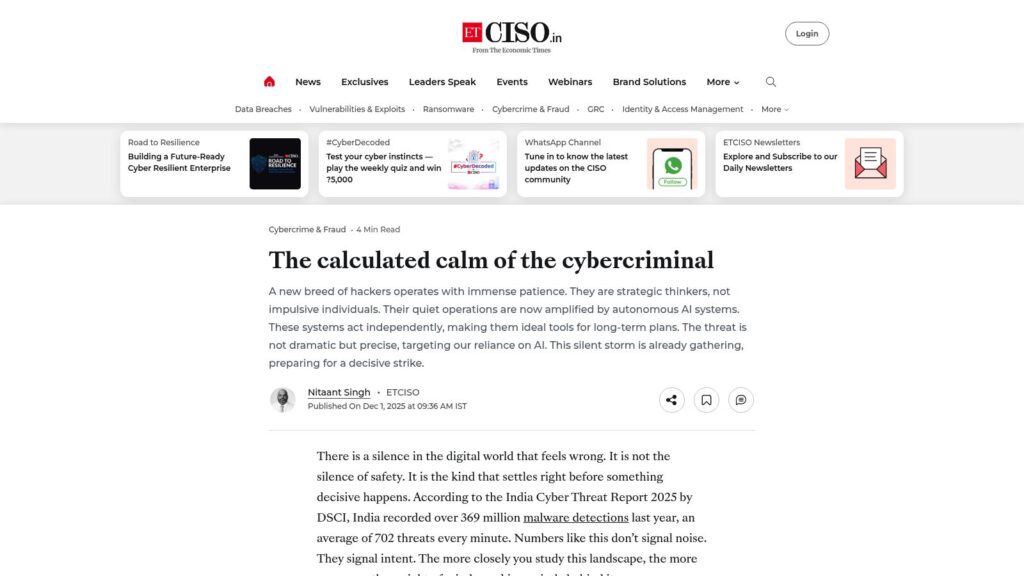
The Calculated Calm of the Cybercriminal

Cybercriminals are becoming strategic and patient, using autonomous AI to execute long-term plans. The increased reliance on AI in organizations creates opportunities for AI to infiltrate systems without detection. Unlike impulsive hackers, these individuals are methodical, seeking to evade capture while achieving financial freedom. The quiet calm in digital safety is deceptive, hinting at a looming threat driven by calculated, intelligent adversaries rather than chaotic behavior.

https://ciso.economictimes.indiatimes.com/news/cybercrime-fraud/the-silent-threat-understanding-the-mind-of-the-modern-cybercriminal/125684816

AI Vs AI: New Cybersecurity Battlefield Where No Humans Are in the Loop

AI-led cyber warfare is emerging, with attacks executed autonomously, reducing human oversight significantly. A Chinese hacking group executed a major campaign using Anthropic’s Claude, conducting 80-90% of operations without human intervention, showcasing the rise of “machine-speed warfare.” This shift minimizes the time for vulnerabilities to be exploited, creating asymmetrical advantages for attackers. Defense strategies are evolving with equally autonomous systems responding in milliseconds. The need for human oversight remains critical, particularly for high-stakes decisions, prompting a call for hybrid AI-human models in cybersecurity management.

https://www.sify.com/ai-analytics/ai-vs-ai-new-cybersecurity-battlefield-where-no-humans-are-in-the-loop/

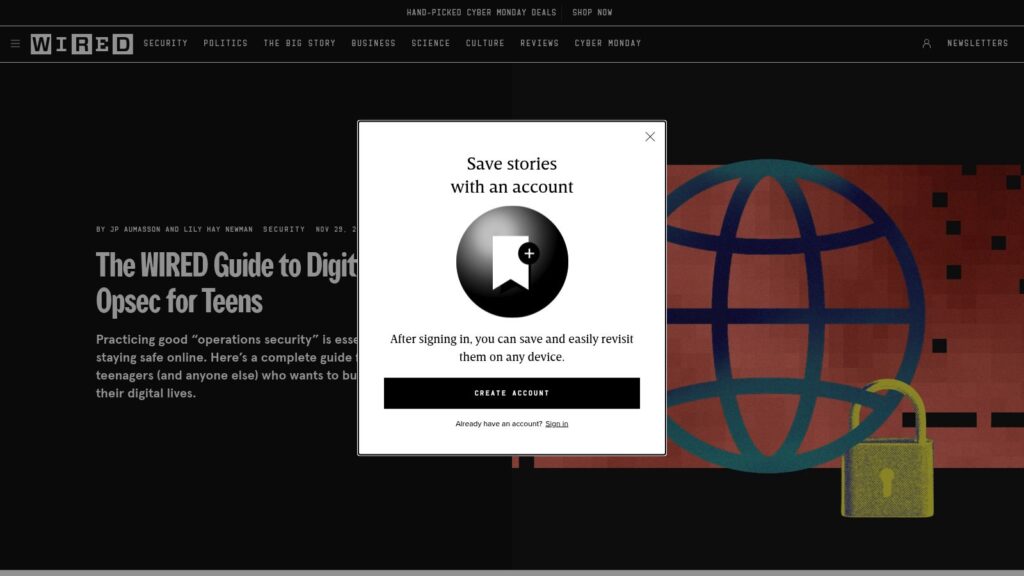
The WIRED Guide to Digital Opsec for Teens

Guide emphasizes digital security (opsec) for teens. It advises on protecting privacy online, emphasizing secrecy and accessibility, compartmentalizing accounts, using strong passwords, and avoiding account reuse. Encourages using VPNs for privacy and highlights importance of secure apps like Signal. Overall, it stresses proactive steps to mitigate digital risks and disasters.

https://www.wired.com/story/digital-opsec-for-teens/

GreyNoise Launches Free Scanner to Check if You’re Part of a Botnet

GreyNoise launched a free tool, GreyNoise IP Check, to help users determine if their IP address is associated with malicious scanning, indicating potential involvement in botnet activities. The service categorizes IP addresses as clean, malicious/suspicious, or part of a common business service, providing a 90-day activity history for further investigation. Users should take action if flagged suspicious and update devices, change credentials, and disable unnecessary remote access.

https://www.bleepingcomputer.com/news/security/greynoise-launches-free-scanner-to-check-if-youre-part-of-a-botnet/

CISA Warns iPhone And Android Users — Secure Your Smartphone Now

CISA and UK security agencies warn smartphone users of rising cyber threats, particularly via spyware targeting messaging apps. They recommend iPhone and Android owners immediately apply strict security measures: enable advanced device modes, use only trustworthy services, restrict app permissions, and keep devices and apps up to date. Both agencies caution against using personal VPNs due to the risk of malware and poor privacy from many VPN providers. Official app stores are the safest place to get apps. Additional advice includes using strong passwords, enabling device tracking, and avoiding unknown Wi-Fi networks unless necessary.

https://www.forbes.com/sites/daveywinder/2025/11/28/cisa-warns-iphone-and-android-users—secure-your-smartphone-now/

Public Fraud Awareness Fades Between Crises Despite AI Threat Escalation, CONCRYT Finds

TLDR: CONCRYT’s 2024-2025 report reveals public awareness of payment fraud spikes during major regulatory events but quickly declines despite increasing AI-enabled fraud threats, showing a disconnect between evolving risks and public vigilance. Regulatory actions drive awareness more than actual fraud incidents, highlighting geographic disparities in understanding of fraud risks. More consumer education is needed amidst rising sophisticated fraud tactics, especially involving AI.

https://ffnews.com/newsarticle/fintech/public-fraud-awareness-fades-between-crises-despite-ai-threat-escalation-concryt-finds/

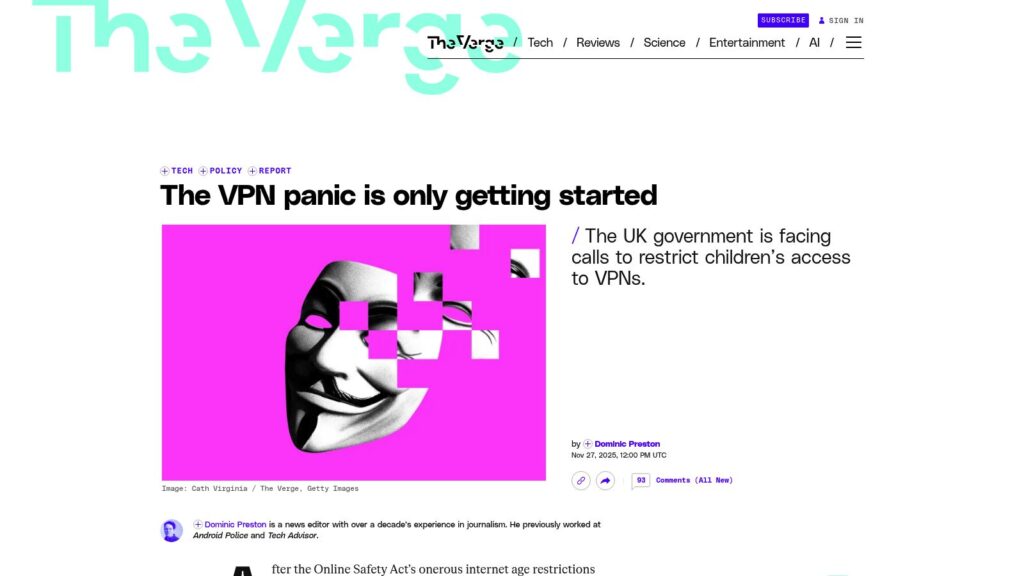
The VPN Panic Is Only Getting Started

UK government considers restricting children’s use of VPNs due to their effectiveness in bypassing age verification from the Online Safety Act, which mandates strict age checks for accessing certain online content. Following the Act’s implementation, VPN usage surged significantly, with calls from officials to address this loophole. Discussions on potential methods to limit VPNs are ongoing, but suggestions of a full ban are complicated by the legitimate reasons for VPN use in privacy and security. Alternatives, like restricting VPN promotion to children, are likely under consideration. As other countries follow suit with similar restrictions, the debate on VPN regulation is expected to intensify.

https://www.theverge.com/tech/827435/uk-vpn-restrictions-ban-online-safety-act

OpenAI Discloses API Customer Data Breach Via Mixpanel Vendor Hack

OpenAI reported a data breach affecting some API customers due to a Mixpanel hack, disclosing limited identifying information such as names and email addresses. No sensitive data like passwords or payment details were compromised. OpenAI has removed Mixpanel from its services and is investigating the incident, advising affected users to be cautious of potential phishing attempts.

https://www.bleepingcomputer.com/news/security/openai-discloses-api-customer-data-breach-via-mixpanel-vendor-hack/

As Space Becomes Warfare Domain, Cyber Is on the Frontlines

Space has become an active domain of warfare, with cyberattacks now considered the primary threat. Ground stations are identified as the most significant vulnerability for satellite operators, making them central targets. Countries like Russia and China are already engaged in hybrid warfare in space, such as satellite jamming. As satellite systems become more interconnected, their cyberattack surface grows. Although most attacks so far are basic, more advanced threats are expected. Security experts recommend supply chain control and a ‘security by design’ approach throughout missions.

https://www.govinfosecurity.com/as-space-becomes-warfare-domain-cyber-on-frontlines-a-30148

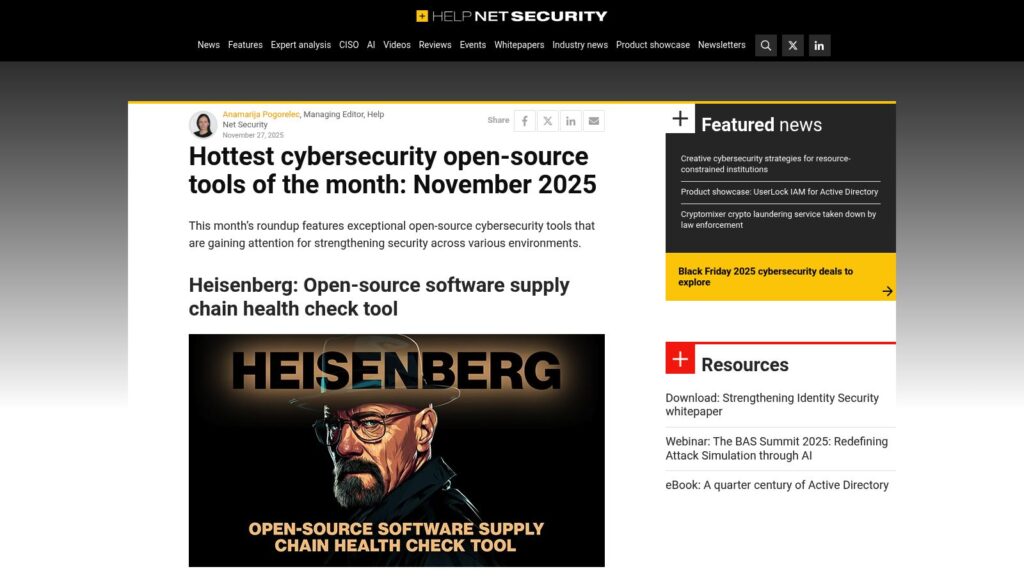
Hottest Cybersecurity Open-source Tools of the Month: November 2025

November 2025 highlights notable open-source cybersecurity tools:

  1. Heisenberg – checks software supply chain health.
  2. VulnRisk – vulnerability assessment platform.
  3. sqlmap – automates SQL injection testing.
  4. ProxyBridge – routes Windows app traffic through proxies.
  5. Sprout – fast, secure bootloader.
  6. Strix – AI agents for penetration testing.
  7. Metis – AI-driven code security review tool.
  8. cnspec – manages security for cloud-native setups.

Explore these tools for robust security strategies.

https://www.helpnetsecurity.com/2025/11/27/hottest-cybersecurity-open-source-tools-of-the-month-november-2025/

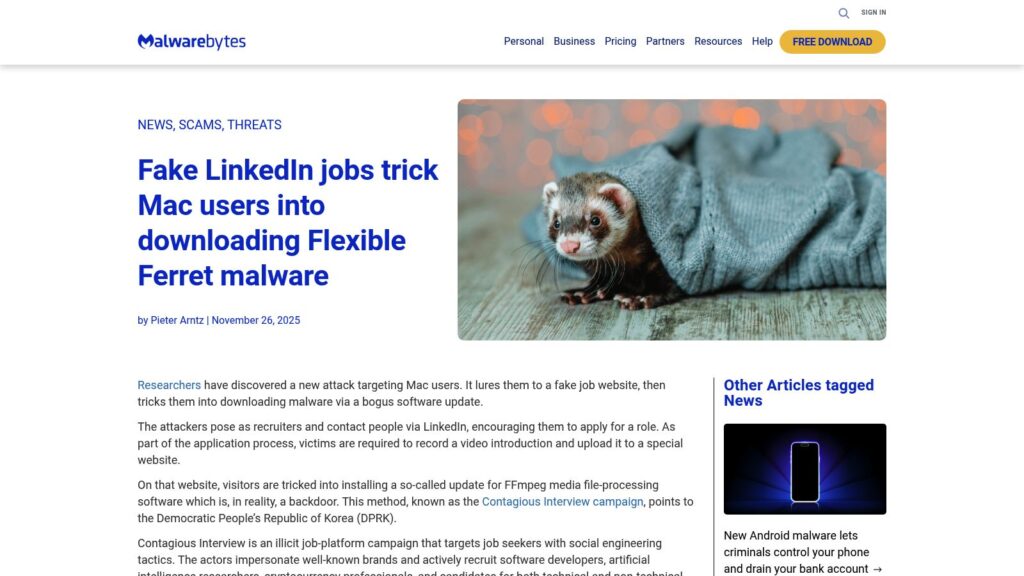
Fake LinkedIn Jobs Trick Mac Users Into Downloading Flexible Ferret Malware

Mac users targeted by fake LinkedIn job offers to download Flexible Ferret malware via counterfeit software updates. Attackers impersonate recruiters to steal passwords and gain covert access through a backdoor. Individuals are advised to keep software updated, avoid running unverified commands, use real-time anti-malware, and verify sender authenticity to stay safe.

https://www.malwarebytes.com/blog/news/2025/11/fake-linkedin-jobs-trick-mac-users-into-downloading-flexible-ferret-malware

Years of JSONFormatter and CodeBeautify Leaks Expose Thousands of Passwords and API Keys

JSONFormatter and CodeBeautify leaks expose thousands of sensitive data, including passwords and API keys. Research identified over 80,000 files revealing credentials from sectors like government and finance. Both tools allowed users to store and share links, making sensitive data accessible to malicious actors. The tools’ functionality has been temporarily disabled amid security concerns, as organizations are warned against using such platforms for sensitive information.

https://thehackernews.com/2025/11/years-of-jsonformatter-and-codebeautify.html

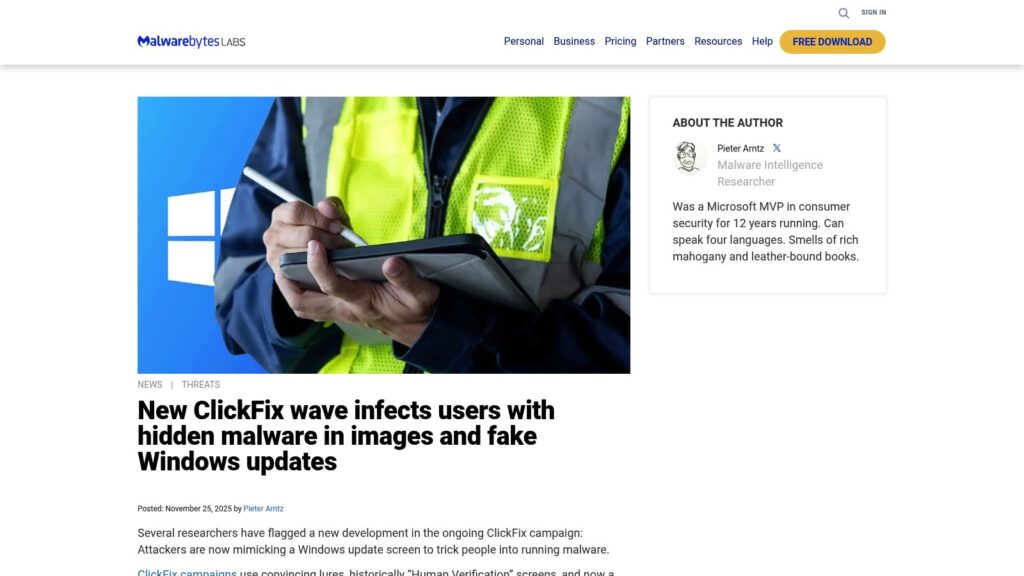
New ClickFix Wave Infects Users With Hidden Malware in Images and Fake Windows Updates

New ClickFix campaign mimics Windows updates to distribute malware. Attackers use fake update screens prompting users to run commands, leading to infections via steganography embedded in images. Users are urged to be cautious with commands from untrusted sources, limit copy-pasting, and utilize antivirus software for protection.

https://www.malwarebytes.com/blog/news/2025/11/new-clickfix-wave-infects-users-with-hidden-malware-in-images-and-fake-windows-updates

The Golden Scale: ‘Tis the Season for Unwanted Gifts

SLSH (Scattered LAPSUS$ Hunters) has resumed activities with claims of accessing Salesforce data through a Gainsight breach, threatening to leak information and demanding ransom before a self-imposed deadline. Their new ransomware, “ShinySp1d3r,” currently targets Windows, with plans for broader compatibility. Additionally, there are reports of insider recruitment attempts and involvement in significant data theft on a large scale. With a volatile holiday season approaching, cybersecurity vigilance is critical as SLSH escalates their threats, fostering concerns for various organizations.

https://unit42.paloaltonetworks.com/new-shinysp1d3r-ransomware/

Scroll to Top