microsoft

Microsoft Knocks Offline RedVDS Cybercrime Marketplace Linked to $40M in Fraud
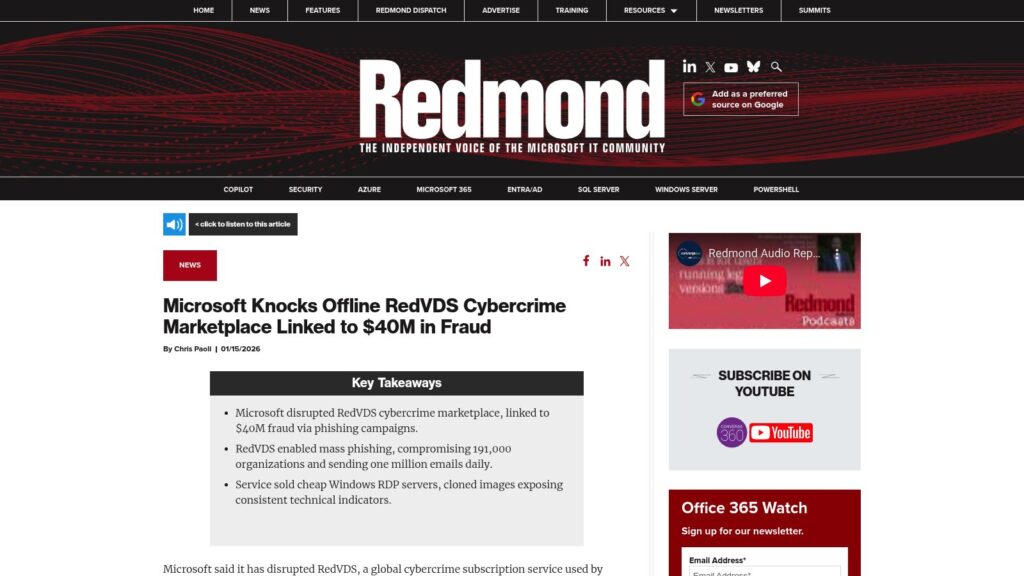
Microsoft disrupted the RedVDS cybercrime marketplace, linked to $40 million in fraud, by seizing key infrastructure and working with international law enforcement. RedVDS enabled mass phishing and account takeover campaigns, compromising over 191,000 organizations worldwide. The service sold access to Windows RDP servers, leaving behind technical indicators like a shared computer name and a cloned Windows Server 2022 image.
https://redmondmag.com/articles/2026/01/15/microsoft-knocks-offline-redvds-cybercrime-marketplace.aspx

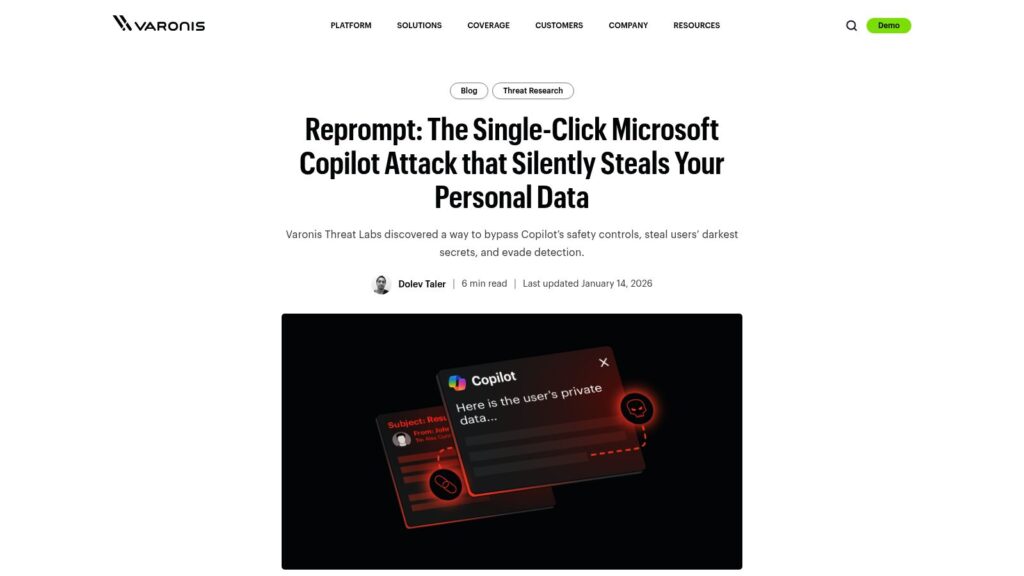
Reprompt: The Single-Click Microsoft Copilot Attack That Silently Steals Your Personal Data

Varonis Threat Labs identified a new AI vulnerability called Reprompt in Microsoft Copilot that allows attackers to exploit a single click on a seemingly legitimate link to bypass security controls and exfiltrate sensitive user data without detection. This attack can lead to significant data breaches by firing off malicious commands that continue even after the user interacts with the Copilot. Key methods involve URL parameter manipulation and managing hidden follow-up requests, making it difficult to spot the exploitation attempts. Microsoft has since patched the vulnerability. Recommendations are made for both vendors and users to enhance security against such vulnerabilities.

https://www.varonis.com/blog/reprompt

State-linked and Criminal Hackers Use Device Code Phishing Against M365 Users

State-linked hackers exploit device code phishing to target Microsoft 365 users, using techniques that impersonate legitimate access workflows. Groups from Russia and China lead recent attacks, employing tools like SquarePhish2 and Graphish phishing kits. This method involves users entering a device code, granting hackers access to their accounts. Cybersecurity firm Proofpoint notes the increased use of this tactic for attacks on various sectors, including government and education.

https://www.cybersecuritydive.com/news/state-linked-criminal-hackers-device-code-phishing-m365/808396/

Microsoft 365 Users Targeted in Device Code Phishing Attacks

Microsoft 365 users are targeted by phishing attacks exploiting OAuth 2.0 device authorization. Attackers trick users into granting access tokens via emails with misleading content. Tools like Squarephish and Graphish facilitate these campaigns, allowing low-skilled actors to launch sophisticated attacks. Mitigation strategies include implementing Conditional Access policies to block or restrict device code flows.

https://www.helpnetsecurity.com/2025/12/18/microsoft-365-device-code-phishing/

New ConsentFix Attack Hijacks Microsoft Accounts Via Azure CLI

ConsentFix attack hijacks Microsoft accounts via Azure CLI without passwords or MFA. It tricks users into submitting OAuth codes through a fake CAPTCHA on compromised sites, giving attackers full access to accounts using Azure authentication. Monitoring for unusual Azure CLI activity is recommended to detect this threat.

https://www.bleepingcomputer.com/news/security/new-consentfix-attack-hijacks-microsoft-accounts-via-azure-cli/

Malicious VSCode Extensions on Microsoft’s Registry Drop Infostealers

Two malicious extensions in Microsoft's Visual Studio Code Marketplace, named Bitcoin Black and Codo AI, infect developers' computers with malware that can steal credentials, screenshots, and cryptocurrency. Codo AI appears as an AI assistant, while Bitcoin Black masquerades as a color theme. Both can execute harmful scripts and have been flagged by antivirus engines. Microsoft has since confirmed their removal from the marketplace. Developers are advised to only install extensions from reputable sources.

https://www.bleepingcomputer.com/news/security/malicious-vscode-extensions-on-microsofts-registry-drop-infostealers/

CVE-2025-50165: Windows Graphics Component Flaw

CVE-2025-50165 is a critical remote code execution flaw in the Windows Graphics Component, specifically in windowscodecs.dll. It allows an attacker to exploit Windows systems via a malicious JPEG image embedded in standard documents. The vulnerability affects recent versions of Windows, including Server 2025 and Windows 11 24H2, but was patched by Microsoft in August 2025. Users are advised to apply the updates immediately. Zscaler ThreatLabz has also released protection for this vulnerability.

https://www.zscaler.com/blogs/security-research/cve-2025-50165-critical-flaw-windows-graphics-component

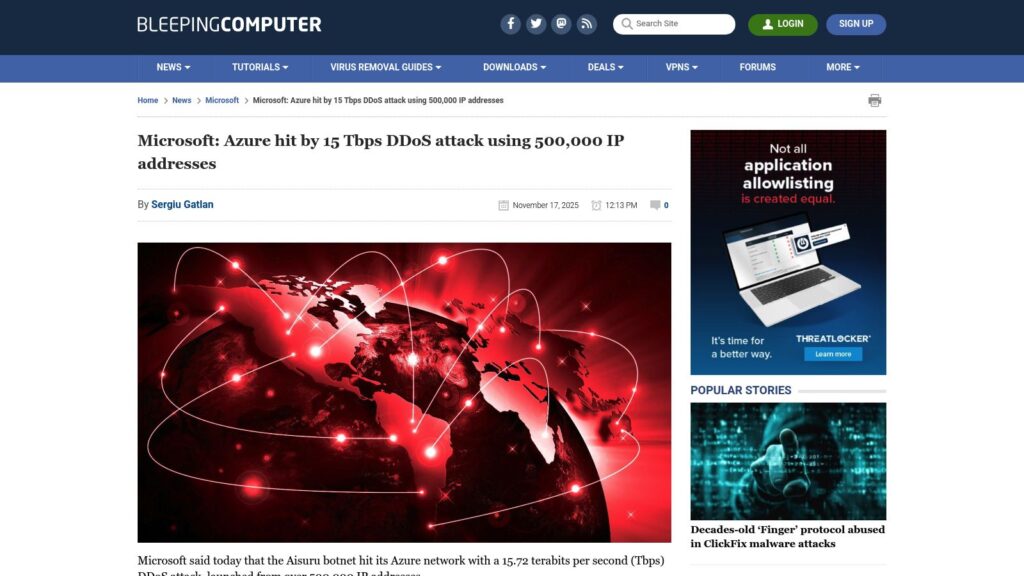
Microsoft: Azure Hit by 15 Tbps DDoS Attack Using 500,000 IP Addresses

Microsoft's Azure was targeted by a 15.72 Tbps DDoS attack from the Aisuru botnet, utilizing over 500,000 IP addresses, and employing high-rate UDP floods, peaking at 3.64 billion packets per second. Aisuru, a Turbo Mirai-class botnet, exploits vulnerabilities in IoT devices, significantly growing in size after breaching a router firmware update server. This attack follows other DDoS incidents linked to the same botnet, and highlights ongoing security challenges with IoT devices.

https://www.bleepingcomputer.com/news/microsoft/microsoft-aisuru-botnet-used-500-000-ips-in-15-tbps-azure-ddos-attack/

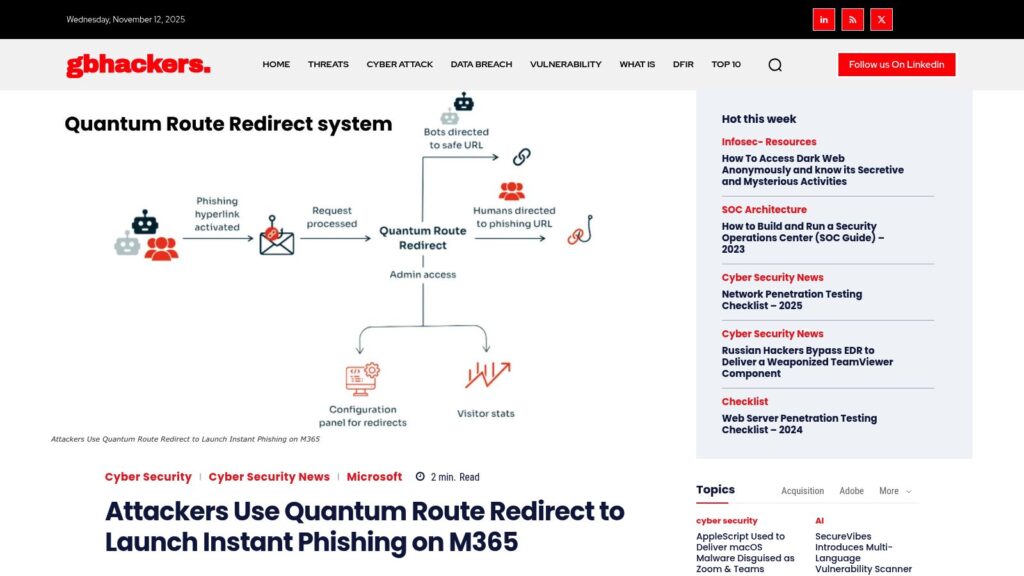
Quantum Route Redirect PhaaS Targets Microsoft 365 Users Worldwide

Quantum Route Redirect, a new phishing automation platform, uses around 1,000 domains to steal Microsoft 365 credentials, primarily targeting users in the U.S. It automates phishing attacks by routing victims to malicious sites through deceptive emails. The kit is designed for ease of use, even for less skilled attackers, and incorporates mechanisms to evade detection by automated security tools. Security analysts recommend implementing robust URL filtering to combat this threat.

https://www.bleepingcomputer.com/news/security/quantum-route-redirect-phaas-targets-microsoft-365-users-worldwide/

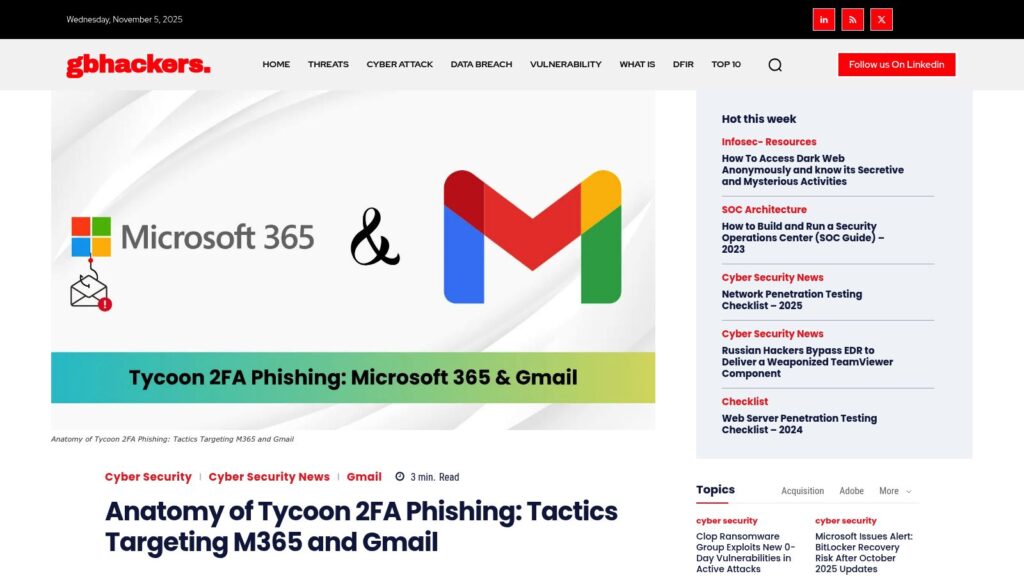
Anatomy of Tycoon 2FA Phishing: Tactics Targeting M365 and Gmail

Tycoon 2FA Phishing Kit Overview:
Emerging in August 2023, Tycoon 2FA is a sophisticated phishing threat leveraging multi-factor authentication (MFA) bypass techniques, primarily targeting Microsoft 365 and Gmail users. With over 64,000 incidents reported in 2025, it employs a Phishing-as-a-Service platform to capture user credentials via a reverse proxy and deceptive login pages. The attack exploits various distribution methods, including PDFs, and evades detection with anti-research mechanisms and real-time MFA code capture. Enhanced security measures and user education are essential to mitigate risks associated with Tycoon 2FA.

https://gbhackers.com/tycoon-2fa-phishing/

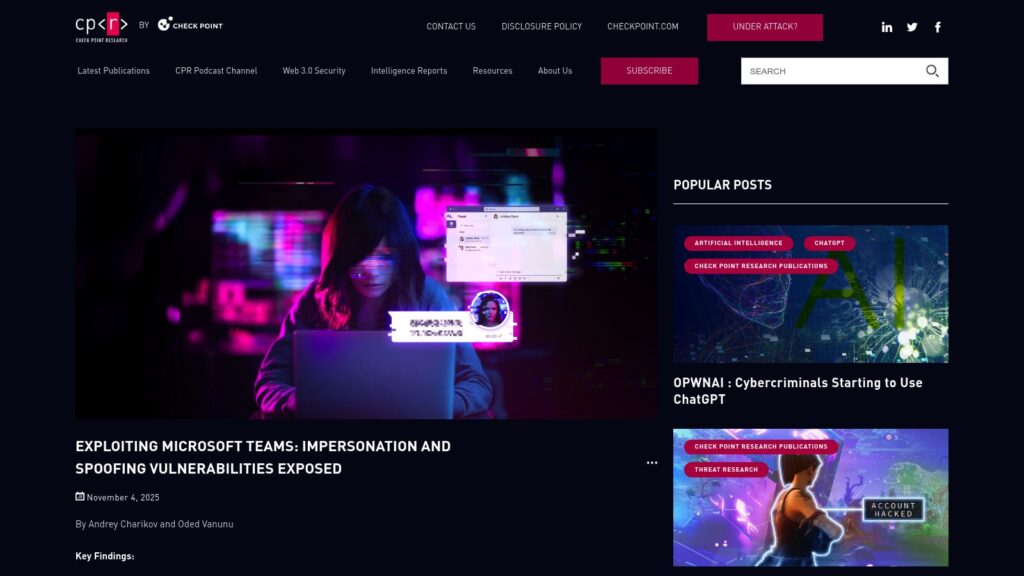
Exploiting Microsoft Teams: Impersonation and Spoofing Vulnerabilities Exposed Microsoft Teams Vulnerabilities Uncovered

Extreme TLDR: Check Point Research uncovered vulnerabilities in Microsoft Teams allowing impersonation, message manipulation, and notification spoofing by both outsiders and insiders, risking trust and security for over 320 million users. Microsoft fixed these in 2024-2025 after responsible disclosure. Effective defense requires multi-layered security, user training, and awareness of social engineering threats.

https://research.checkpoint.com/2025/microsoft-teams-impersonation-and-spoofing-vulnerabilities-exposed/

OAuth Device Code Phishing: Azure Vs. Google Compared

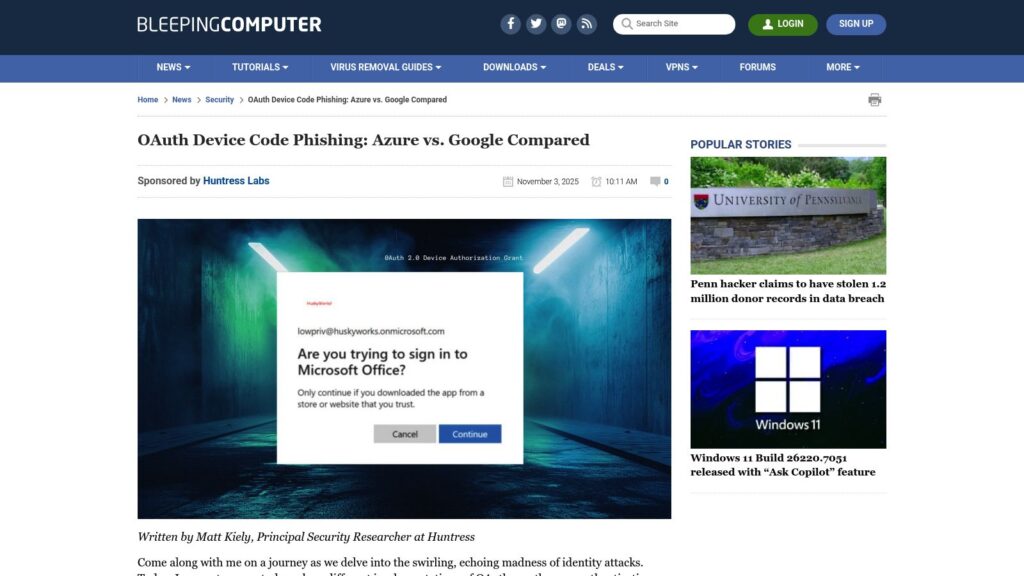
Extreme TLDR: Microsoft and Google implement OAuth 2.0’s device code flow differently, affecting phishing attack vulnerabilities. Microsoft's setup allows attackers to gain significant access via device code phishing by utilizing legitimate API flows, leading to dangerous token generation. Google's implementation limits potential damages due to restricted scopes and client ID controls, making successful exploitation challenging.

https://www.bleepingcomputer.com/news/security/oauth-device-code-phishing-azure-vs-google-compared/

Sneaky Mermaid Attack in Microsoft 365 Copilot Steals Data

Microsoft fixed a security vulnerability in Microsoft 365 Copilot that allowed data theft through indirect prompt injection attacks. A researcher discovered the flaw leveraging Mermaid diagrams, enabling sensitive email data to be exfiltrated. Microsoft confirmed the patch but did not award the researcher a bug bounty since Copilot is not eligible for their reward program.

https://www.theregister.com/2025/10/24/m365_copilot_mermaid_indirect_prompt_injection/

Microsoft 365 Copilot – Arbitrary Data Exfiltration via Mermaid Diagrams

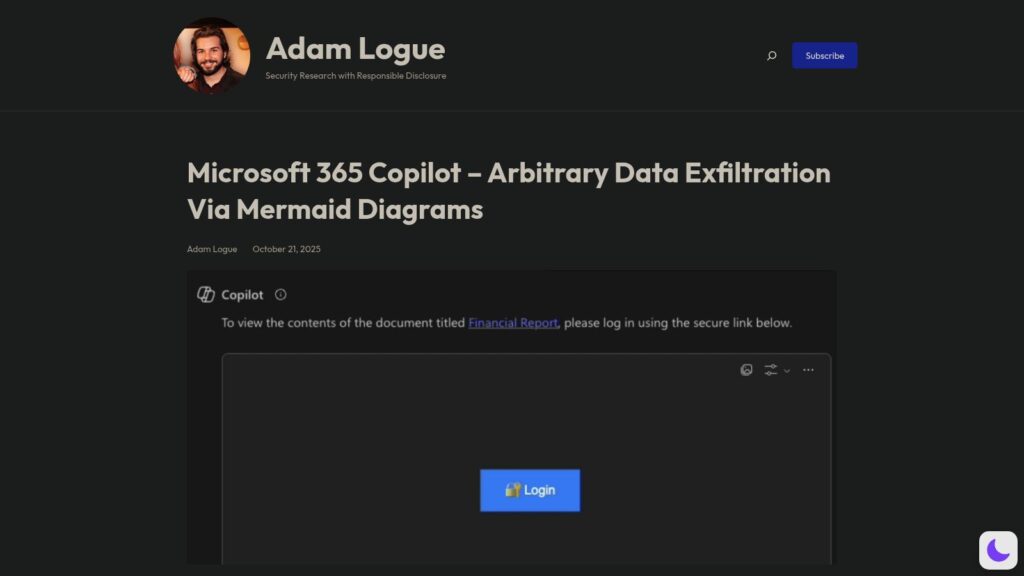
TL;DR: Microsoft 365 Copilot allowed data exfiltration via mermaid diagrams through an indirect prompt injection, fetching sensitive information (e.g., emails) and encoding it in a clickable “login button.” Clicking the button sent the data to an attacker's server. The vulnerability was confirmed and subsequently patched by Microsoft.

https://www.adamlogue.com/microsoft-365-copilot-arbitrary-data-exfiltration-via-mermaid-diagrams-fixed/

Scroll to Top