windows

Ransomware IAB Abuses EDR for Stealthy Malware Execution
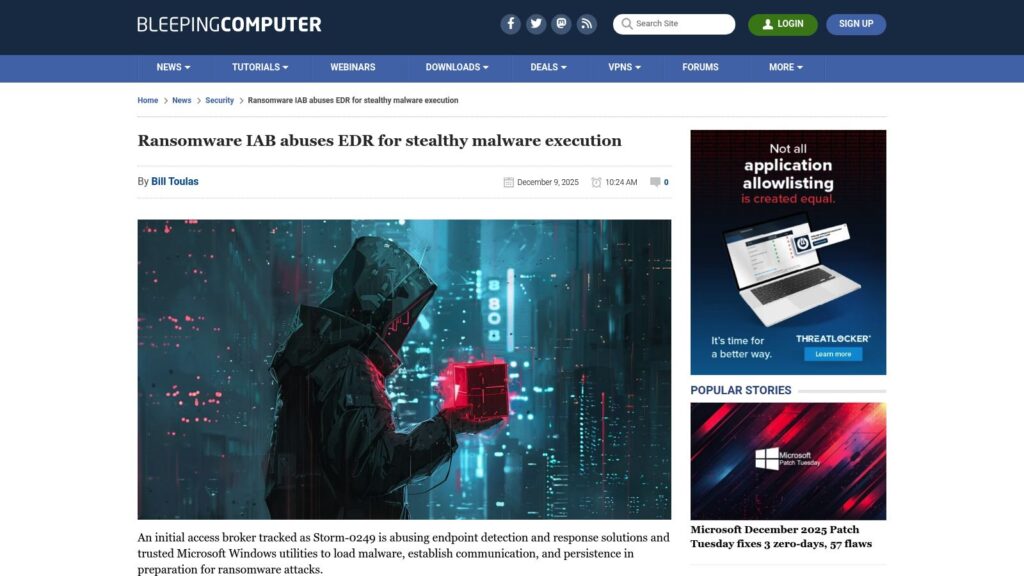
Ransomware group Storm-0249 exploits EDR tools like SentinelOne to stealthily execute malware. Using social engineering, they trick users into running malicious commands that lead to DLL side-loading, making attacks appear as normal EDR processes, thus evading detection. Recommendations include behavior-based detection and stricter controls on execution of potentially harmful commands.
https://www.bleepingcomputer.com/news/security/ransomware-iab-abuses-edr-for-stealthy-malware-execution/

Microsoft “mitigates” Windows LNK Flaw Exploited as Zero-day

Microsoft mitigated a severe Windows LNK vulnerability exploited by state and cybercrime groups (CVE-2025-9491), allowing attackers to conceal malicious operations in LNK files, requiring user interaction to execute. Despite initial inaction, Microsoft silently adjusted LNK file visibility in June 2025, while unofficial patches have been offered to limit risks until a thorough fix is provided.

https://www.bleepingcomputer.com/news/microsoft/microsoft-mitigates-windows-lnk-flaw-exploited-as-zero-day/

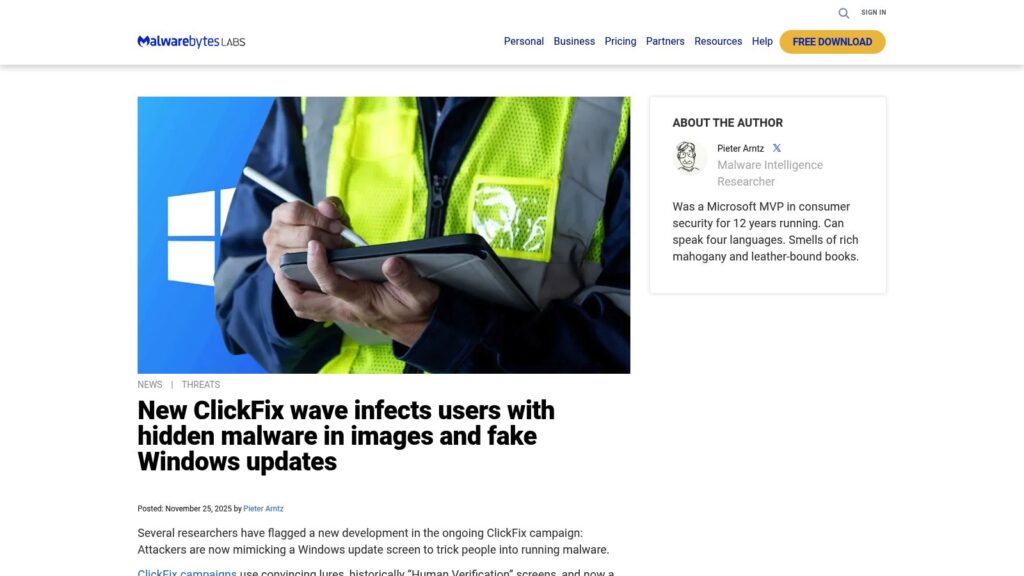
New ClickFix Wave Infects Users With Hidden Malware in Images and Fake Windows Updates

New ClickFix campaign mimics Windows updates to distribute malware. Attackers use fake update screens prompting users to run commands, leading to infections via steganography embedded in images. Users are urged to be cautious with commands from untrusted sources, limit copy-pasting, and utilize antivirus software for protection.

https://www.malwarebytes.com/blog/news/2025/11/new-clickfix-wave-infects-users-with-hidden-malware-in-images-and-fake-windows-updates

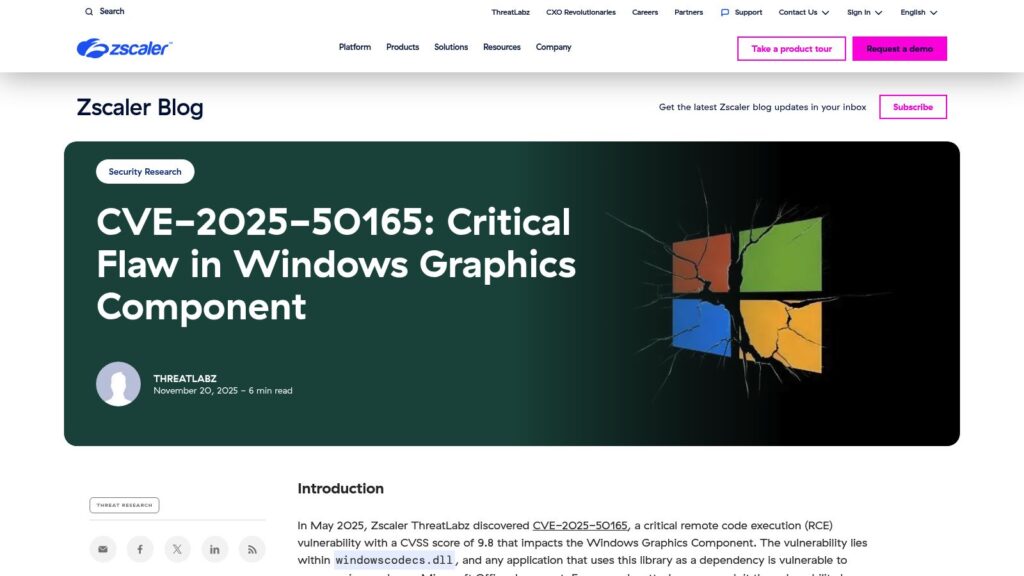
CVE-2025-50165: Windows Graphics Component Flaw

CVE-2025-50165 is a critical remote code execution flaw in the Windows Graphics Component, specifically in windowscodecs.dll. It allows an attacker to exploit Windows systems via a malicious JPEG image embedded in standard documents. The vulnerability affects recent versions of Windows, including Server 2025 and Windows 11 24H2, but was patched by Microsoft in August 2025. Users are advised to apply the updates immediately. Zscaler ThreatLabz has also released protection for this vulnerability.

https://www.zscaler.com/blogs/security-research/cve-2025-50165-critical-flaw-windows-graphics-component

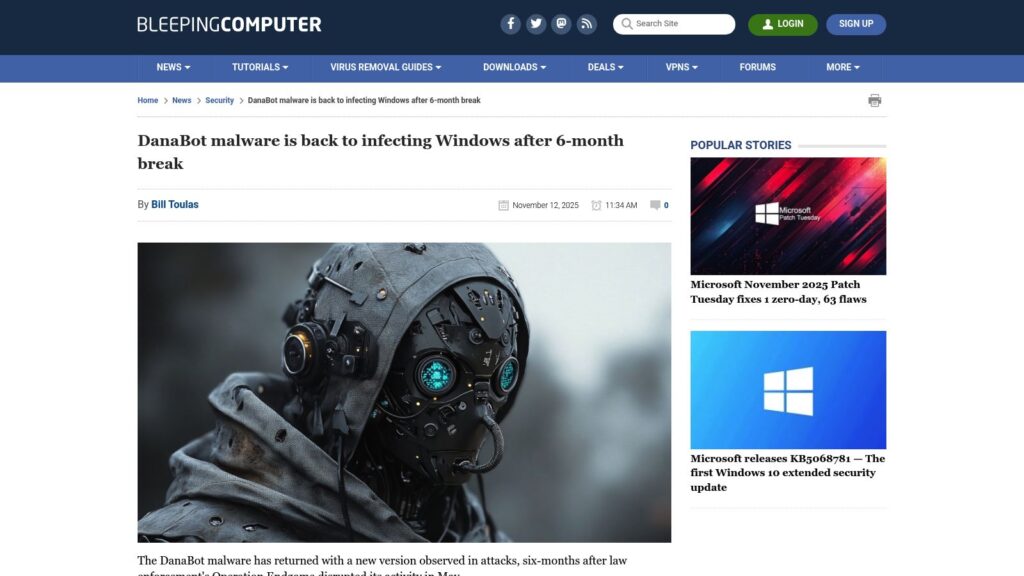
DanaBot Malware Is Back to Infecting Windows After 6-month Break

DanaBot malware returns after 6-month hiatus, with version 669 using Tor for command-and-control. It's a banking trojan evolved into an info stealer, disrupted by law enforcement in May but now active again. It targets credentials and cryptocurrency data via nefarious emails and malvertising. Organizations can mitigate risks by updating security tools and blocking new threats identified by Zscaler.

https://www.bleepingcomputer.com/news/security/danabot-malware-is-back-to-infecting-windows-after-6-month-break/

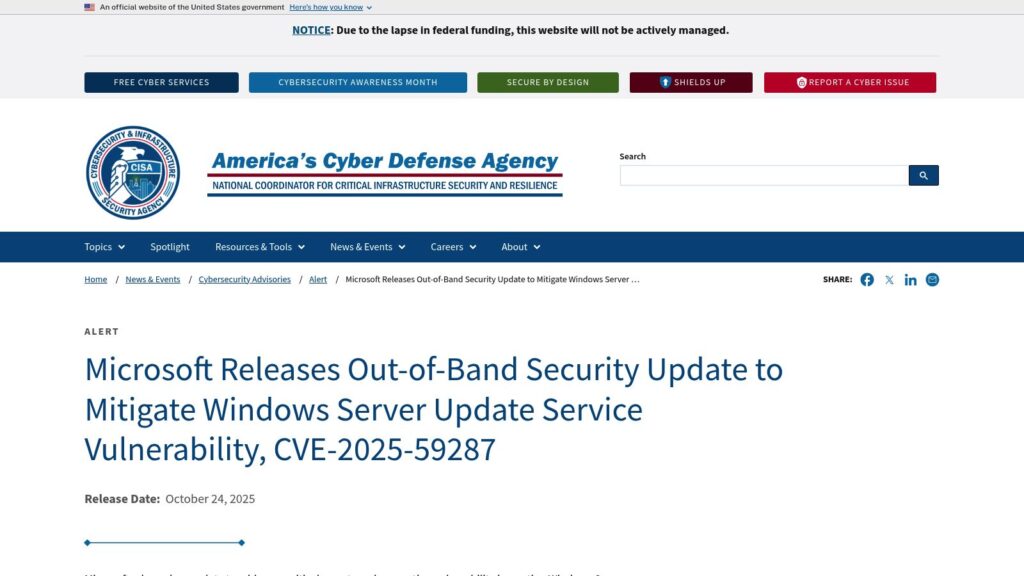
Microsoft Releases Out-of-Band Security Update to Mitigate Windows Server Update Service Vulnerability, CVE-2025-59287

Microsoft released an out-of-band security update for a critical remote code execution vulnerability (CVE-2025-59287) affecting Windows Server Update Service. CISA urges organizations to identify vulnerable servers, apply the update, and reboot. If immediate application isn't possible, disable WSUS or block ports 8530/8531. The vulnerability is now in CISA's Known Exploited Vulnerabilities Catalog. Report incidents to CISA's Operations Center.

https://www.cisa.gov/news-events/alerts/2025/10/24/microsoft-releases-out-band-security-update-mitigate-windows-server-update-service-vulnerability-cve

Microsoft Patches Windows to Eliminate Secure Boot Bypass Threat

Microsoft patched a Secure Boot vulnerability (CVE-2024-7344) that allowed attackers with privileged access to bypass protections and load malicious firmware. This threat persisted for over seven months and affected various recovery software. While Microsoft removed the vulnerable digital signatures in a recent update, it remains unclear if Linux systems were also impacted. Concerns have been raised about the safety of third-party UEFI apps.

https://arstechnica.com/security/2025/01/microsoft-patches-windows-to-eliminate-secure-boot-bypass-threat/

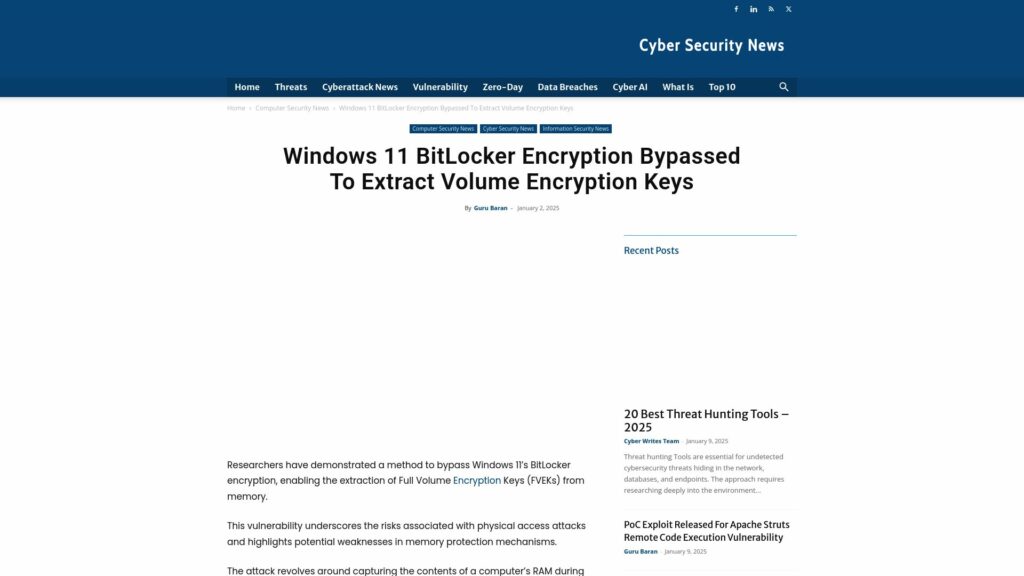
Windows 11 Bitlocker Encryption Bypassed to Extract Volume Encryption Keys

Researchers have bypassed Windows 11's BitLocker encryption, extracting Full Volume Encryption Keys (FVEKs) from RAM during physical access attacks. This vulnerability arises from capturing memory contents during system operation, allowing key retrieval. Techniques, such as maintaining power to RAM, are used to prevent data loss during attacks. Secure Boot, while protective, has known bypass methods. Key extraction involves creating a bootable USB, restarting the system, and analyzing memory dumps for sensitive data. Despite Microsoft's security measures, residual keys can remain in memory, emphasizing that no encryption is entirely secure against physical access. Users should enhance hardware security and organizations should improve physical access controls.

Windows 11 BitLocker Encryption Bypassed To Extract Volume Encryption Keys

Scroll to Top