ai

Harnessing AI for Proactive Threat Intelligence and Advanced Cyber Defense

AI revolutionizes cybersecurity by enabling real-time threat detection, proactive defense, and enhanced data protection. It learns from data patterns, identifies potential threats before they manifest, and automates defense mechanisms to combat sophisticated attacks. Despite its advantages, ethical concerns and potential biases must be addressed. Key benefits include efficient incident management, better endpoint security, and continuous adaptation to emerging threats. Integrating AI with human expertise is vital for robust future cyber defense.

Harnessing AI for Proactive Threat Intelligence and Advanced Cyber Defense

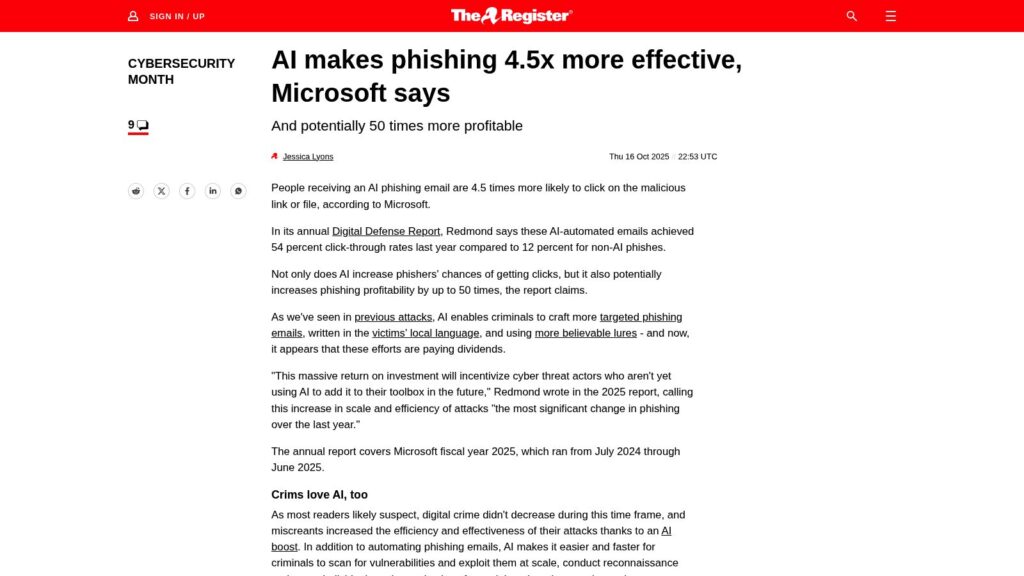
AI-generated Phishing Emails Are Getting Very Good at Targeting Executives

AI-generated phishing emails are increasingly targeting corporate executives. Companies like Beazley and eBay report a rise in hyper-personalized scams using personal details gathered via AI analysis. Experts highlight that AI enables hackers to craft convincing phishing emails that bypass security measures. Phishing is the starting point for over 90% of cyberattacks, with the global cost of data breaches rising. AI's role in identifying vulnerabilities enhances the sophistication of these scams, making them more difficult to detect.

AI-generated phishing emails are getting very good at targeting executives

It’s Only a Matter of Time Before LLMs Jump Start Supply-chain Attacks

LLMs may enhance supply-chain attacks by aiding social engineering, particularly spear phishing. Criminals can exploit existing LLMs rather than creating their own, making attacks more feasible. In 2025, targeted scams based on personal data could rise significantly, as attackers craft convincing messages. Previous incidents, like the Change Healthcare ransomware attack, underscore the potential impacts. Security tools are emerging, but users must remain vigilant against phishing and voice cloning scams. Effective prevention includes careful scrutiny of emails and communications.

https://www.theregister.com/2024/12/29/llm_supply_chain_attacks/

With Open Source Artificial Intelligence, Don’t Forget the Lessons of Open Source Software

Open source AI raises innovation and security concerns, similar to past debates about open source software. CISA emphasizes learning from open source software security to promote responsible development of open foundation models while addressing potential harms. Key lessons include sustainability in contributions to open source ecosystems and prioritizing secure design and transparency in AI model development. CISA advocates for dual-use tools, acknowledging that while risks exist, the benefits for cybersecurity outweigh them. Ensuring safe, secure, and trustworthy AI models is crucial for fostering innovation.

With Open Source Artificial Intelligence, Don’t Forget the Lessons of Open Source Software

Scroll to Top